A New Concertina Sketchbook Workshop
Recently, Left to Draw Studios in Market Harborough invited me to deliver a series of workshops. The gallery and working artists’ studio offers a wide range of creative sessions led by resident artists. As a result, people of all ages come to develop their skills or try something new.
My first two workshops focused on drawing movement. First, one explored sport and the second explored dance. However, the final session took a different direction and centred on making and using a concertina sketchbook. A concertina sketchbook workshop is a first for me and something I’ve wanted to do for some time.
What is a Concertina Sketchbook?
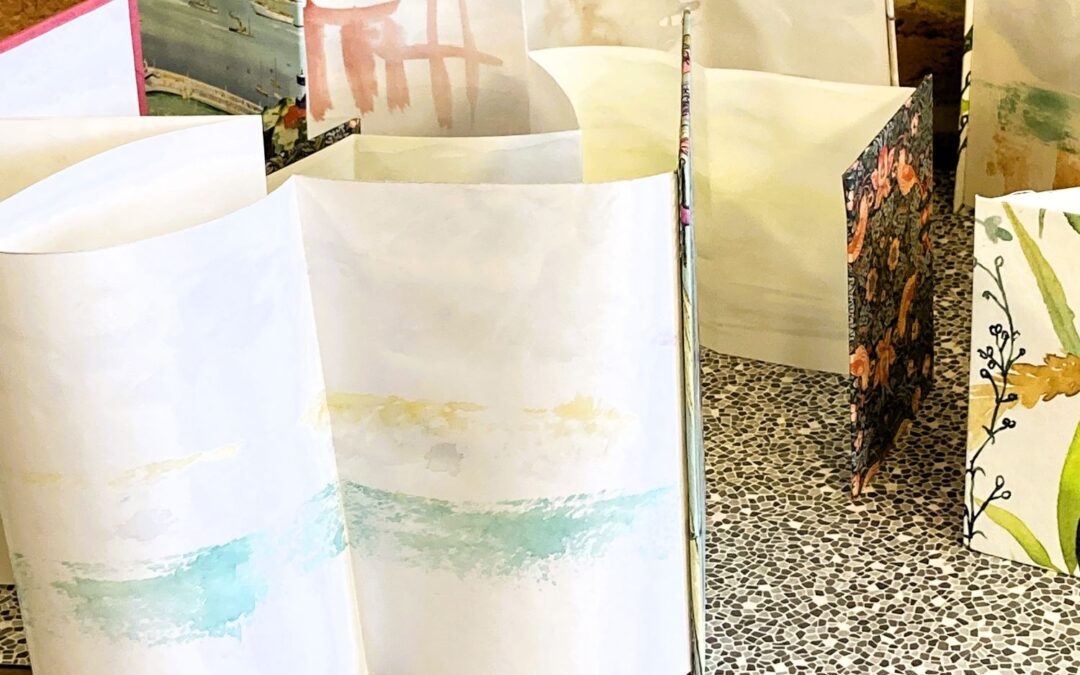
Concertina, or leporello, accordion sketchbooks have a simple structure. They use two front and back boards connected to folded panels of paper. Because of this design, they are ideal for sketching outdoors, telling stories, exploring ideas, or recording the passage of time. In addition, if you make your own, you can choose the number of pages.
I also love how the drawings come off the wall as three-dimensional objects, unframed and free-standing.
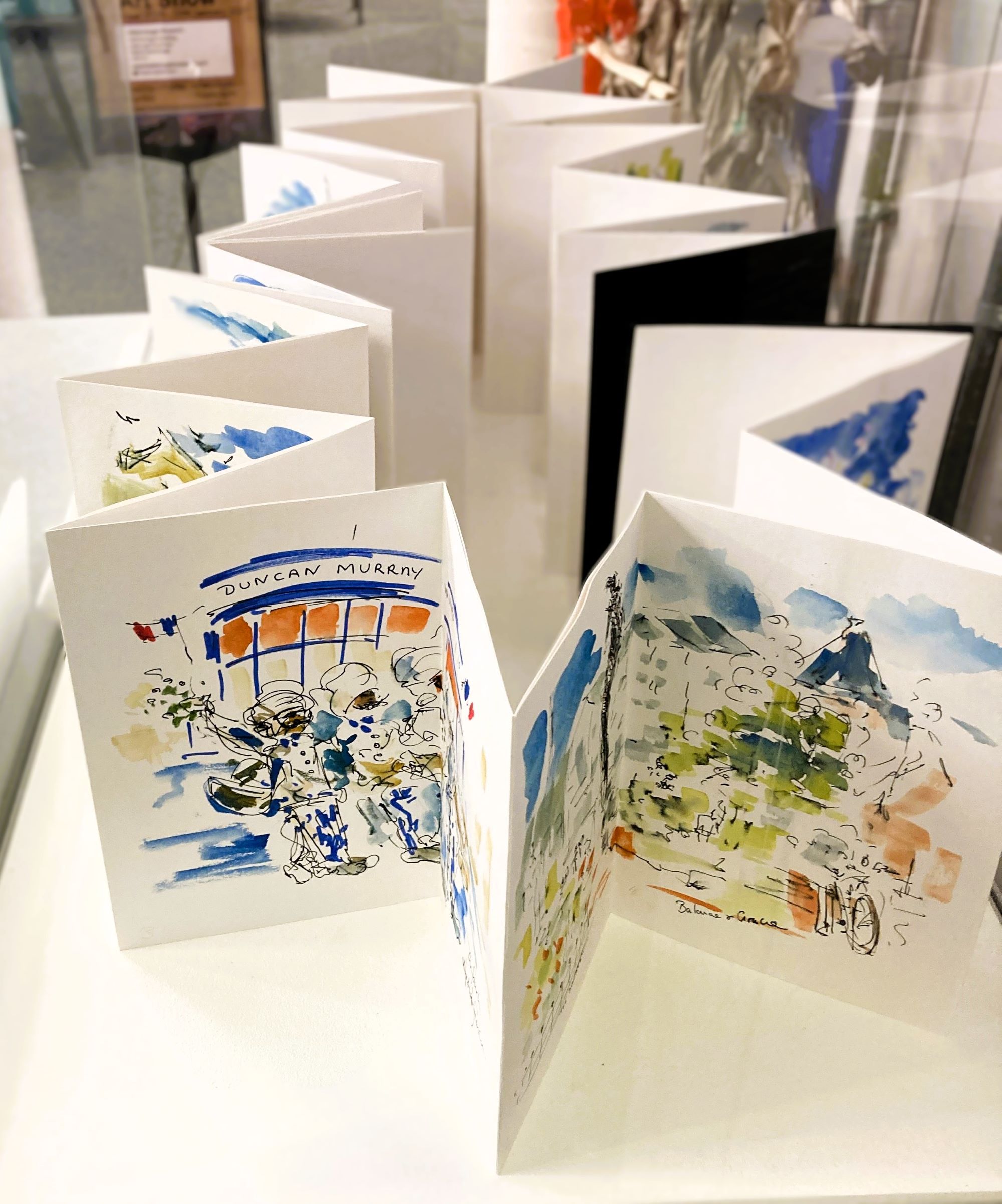
Concertina Sketchbook for Arts Fresco
Workshop Structure
The workshop ran from 10am to 4pm, so I planned the day carefully. First, we made the books before lunch. Then, we used them for drawing in the afternoon.
Using a Simple Kit
Each person received a zip bag containing A5 and A6 backing boards and a few simple tools. Inside were a ruler, two bone folders, and a paint roller for mark making. In addition, I prepared cartridge paper, cut and marked ready to fold into five panels.
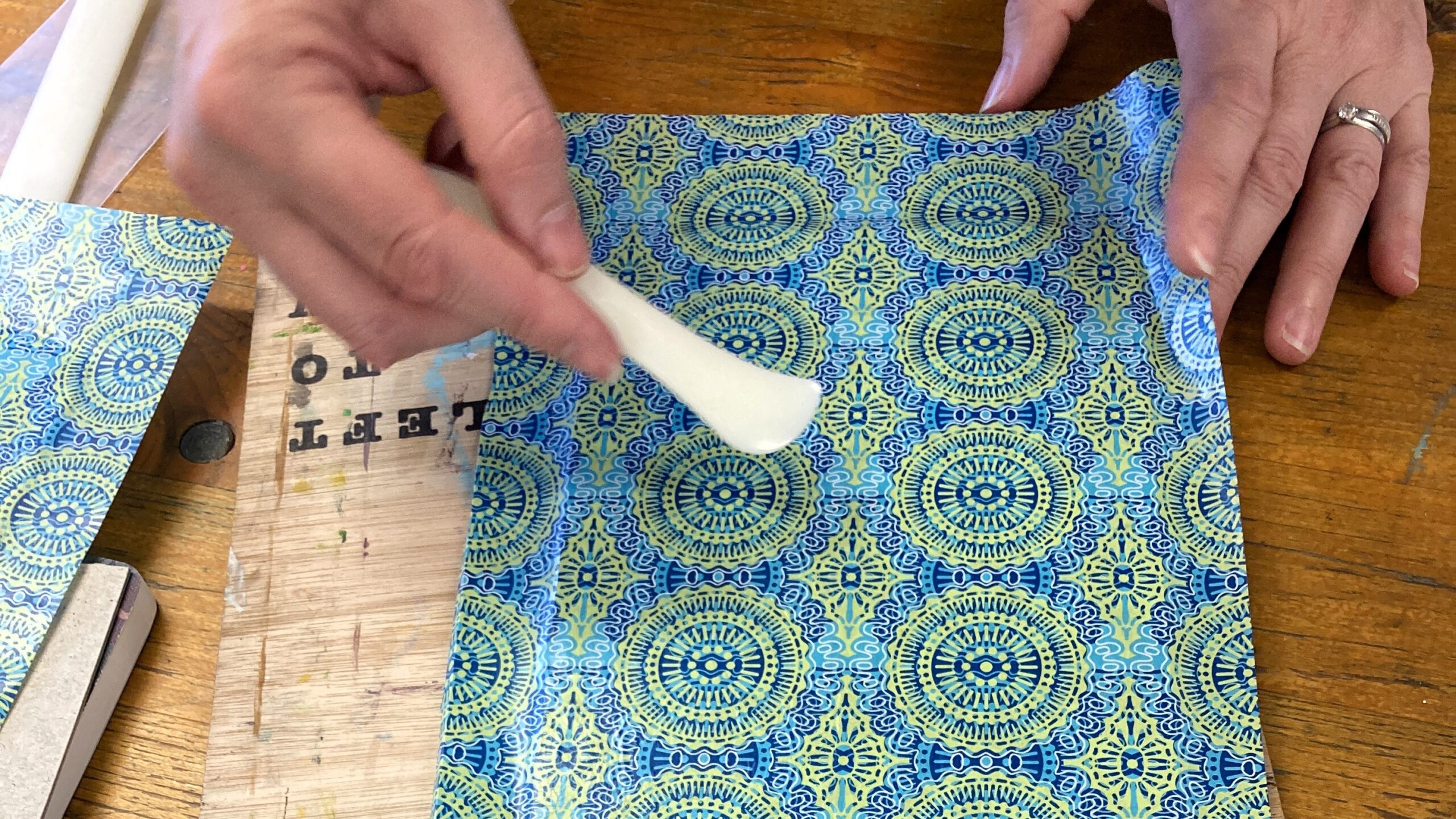
Concertina Sketchbook workshop, header image, showing hands working on book cover using bone folder
Meanwhile, everyone brought favourite drawing materials and collage papers to decorate their covers.
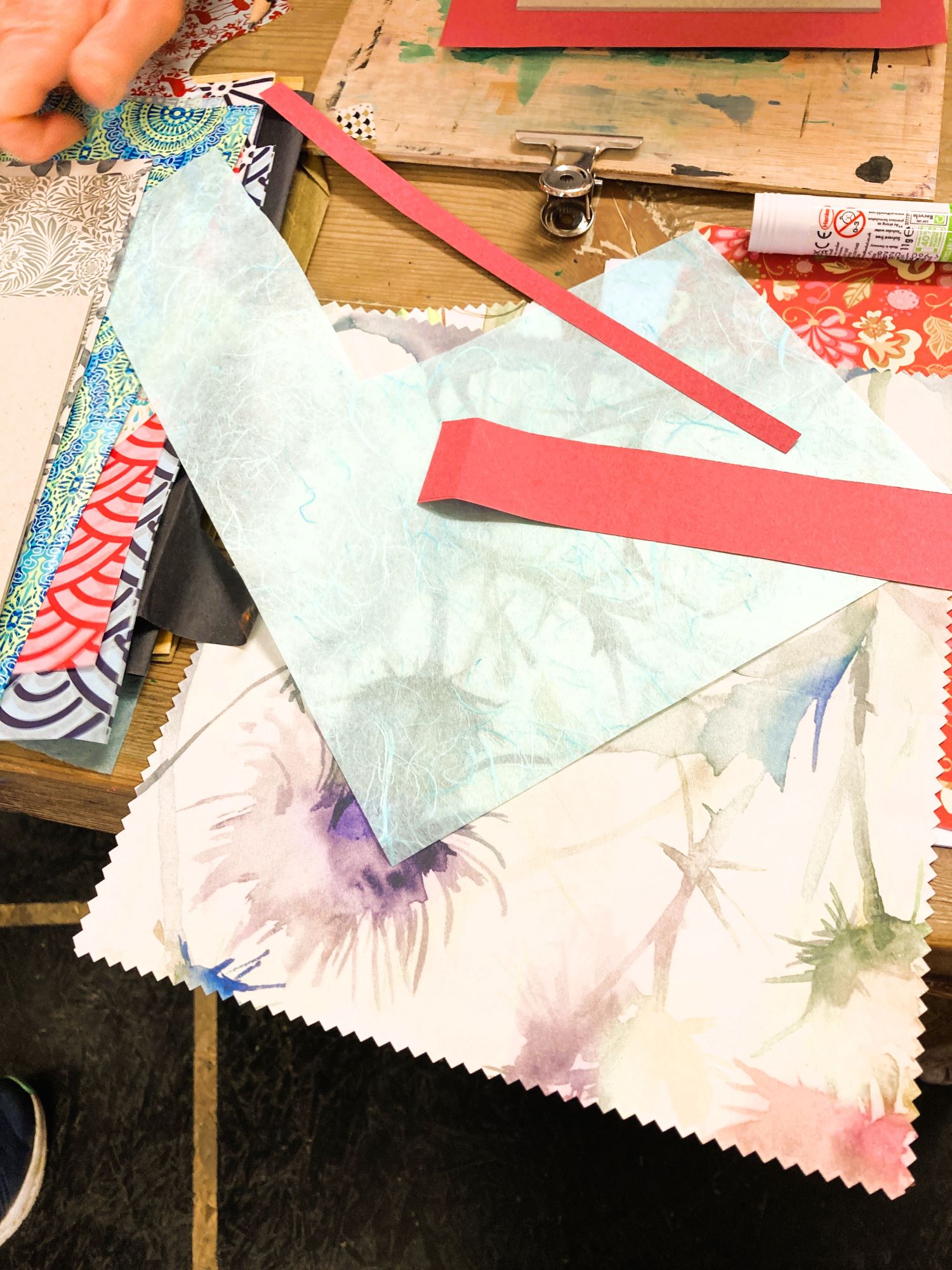
Concertina Sketchbook workshop, cover materials and collage papers
Drawing Our Surroundings
Outside the studio sits Union Wharf, a canal basin on the edge of Market Harborough. Narrowboats moor there during their journeys. As a result, it is a peaceful setting, quiet and calm.
The weather was grey and a little cold in early March. However, the boats offered colourful details. We also found rich textures in the paving, planting, and surrounding buildings.
Finally, using prompts such as colour, form, pattern, sound, texture, and movement, we created focused sketches rather than general views. These prompts sharpened the way we observed the scene and guided the marks flowing across our books.
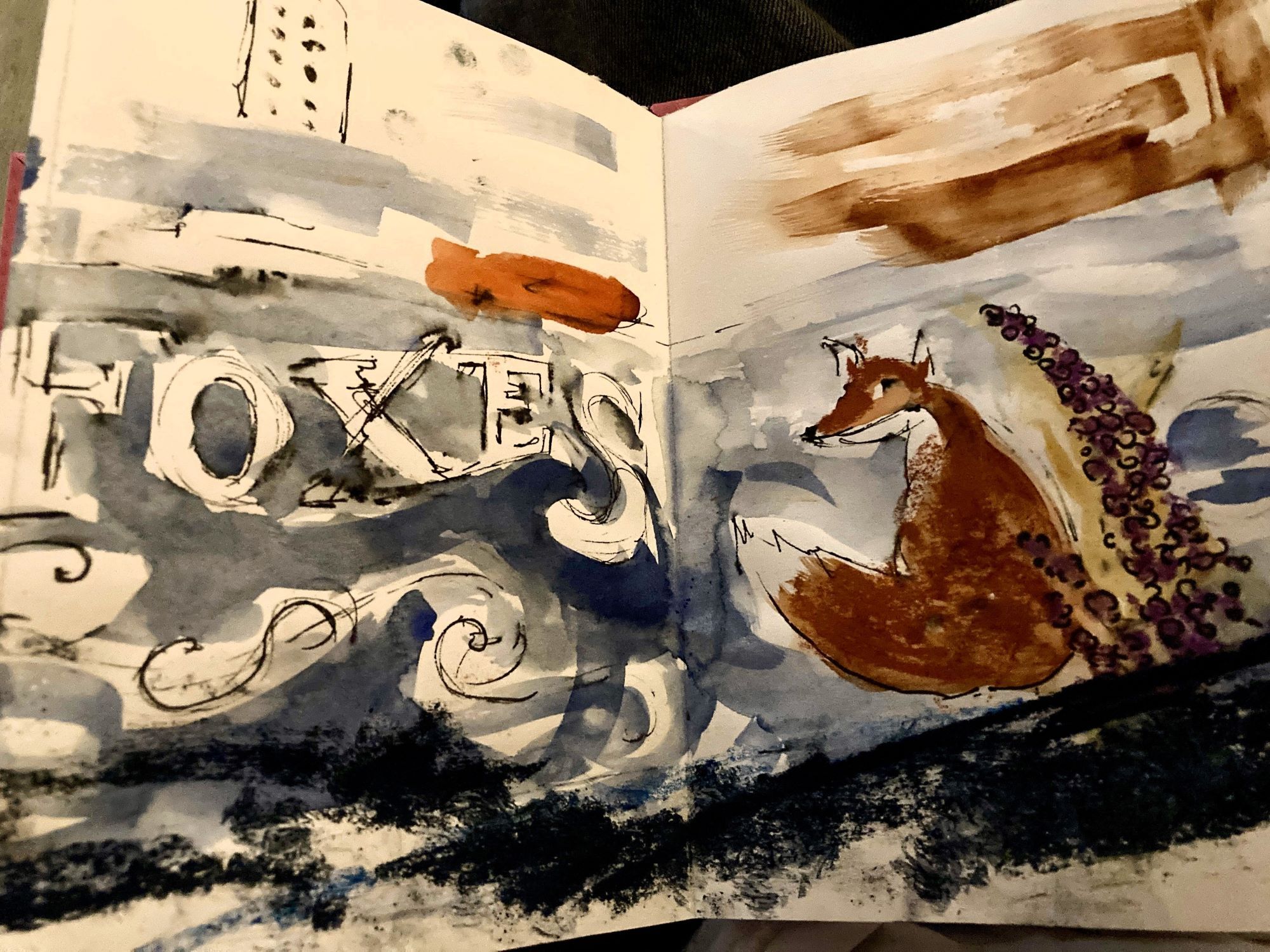
Concertina Sketchbook workshop, location detail drawing, Maxine Dodd
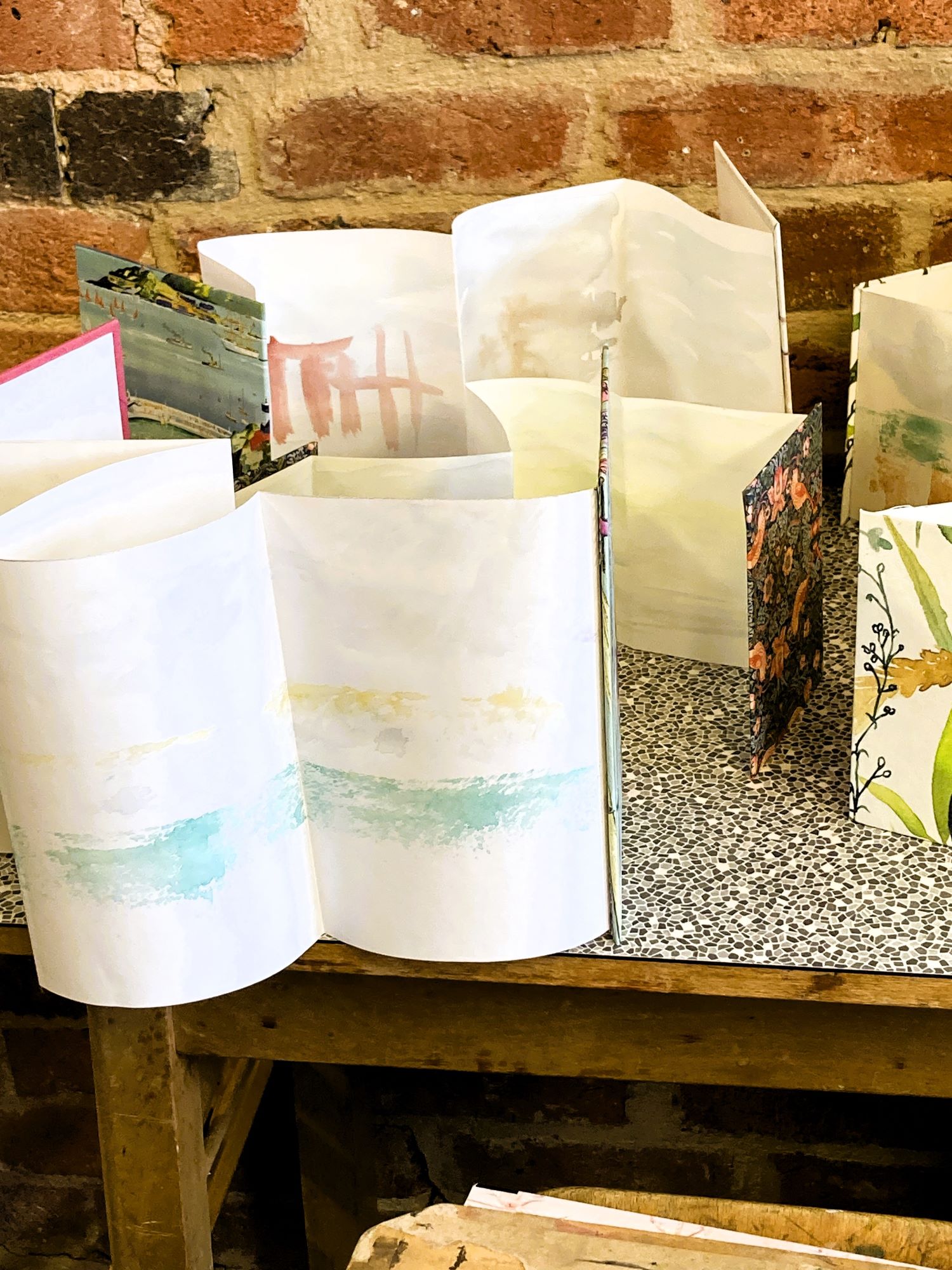
Concertina Sketchbook workshop, standing books
